
EVENT PLANNING BLOG

Corporate Event Planning in Florida: A 2026 Step-by-Step Guide
A successful corporate event feels easy to the guest. Behind the scenes, that ease comes from clear decisions, careful timing, and vendors who understand how their work fits together.
Whether you are planning a company holiday party, client reception, awards dinner, product launch, fundraiser, or conference after-party, the same rule applies: decide what the event needs to accomplish before choosing the details.
In this guide: purpose, budget, date and venue, guest experience, entertainment and AV, engagement, run of show, communication, event week, and follow-up.
1. Define the purpose before you pick the details
Start with one sentence: “When this event is over, we want our guests to…” Your answer might be to feel appreciated, understand a new initiative, meet other leaders, celebrate a milestone, or stay and enjoy time together.
That sentence becomes your filter. It helps you decide whether the event needs a formal program, open networking time, a lively dance floor, interactive entertainment, or a quieter setting for conversation.
Decide what success looks like
Who should attend, and what matters to them?
What do you want guests to do or feel?
What would make leadership call the event successful?
What should happen after the event?

Choose the format around the people in the room and the outcome the event needs to create.
2. Build a budget around priorities
A useful budget does more than set a spending limit. It shows where the guest experience matters most and keeps one category from quietly consuming money needed elsewhere.
List every major category before requesting proposals: venue, catering, entertainment, AV, staffing, rentals, decor, photography or video, transportation, registration, permits, fees, and a contingency reserve. Confirm whether taxes, service charges, labor, delivery, power, parking, security, and overtime are included in each estimate.
Protect the items tied directly to the event’s purpose. If the event centers on speeches and awards, guests must be able to hear and see the program. If the goal is connection and celebration, the room layout, music, hosting, and transitions deserve early attention.
3. Choose the date and venue together
A beautiful room can still create problems if the load-in window is too short, sound rules are restrictive, or the indoor backup plan is vague. Before signing, walk through the complete event, not just the floor plan.
Questions to ask the venue
What are the event hours, music cutoff, and sound limits?
Can outside entertainment and AV vendors work in the space?
Are there outside-vendor, patch, labor, or power fees?
When can vendors load in, test equipment, and load out?
Where are the loading area, freight elevator, and nearby power sources?
What is the written weather plan for any outdoor portion?
How will parking, rideshare drop-off, and accessibility work?
Is there reliable internet where registration or presentations will happen?
For a Florida outdoor event, set the backup plan while selecting the venue. Decide what moves indoors, who makes the call, when that decision is due, and how guests and vendors will be notified.
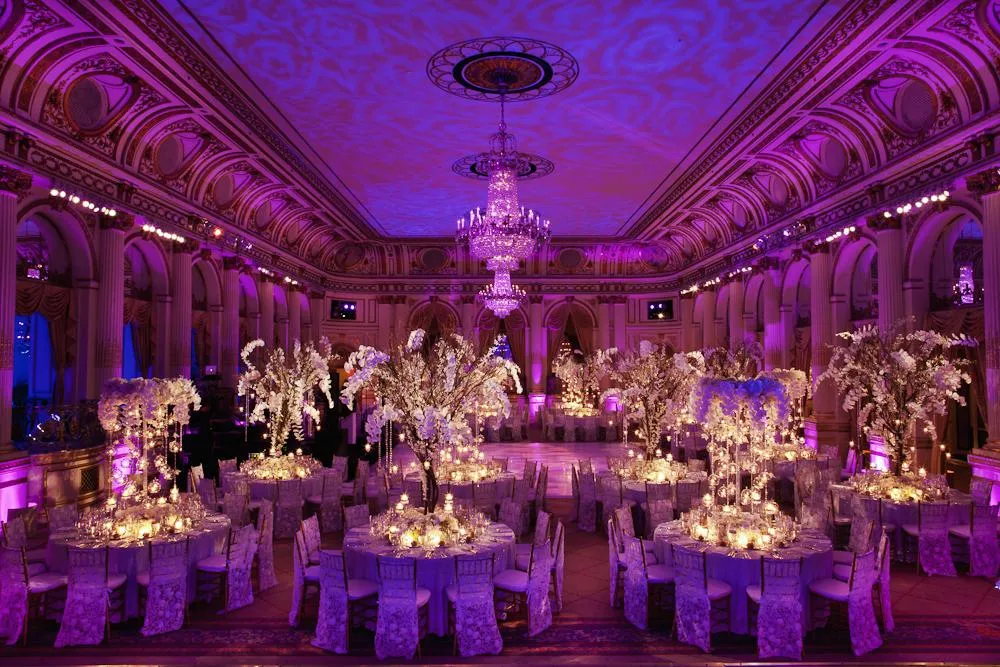
Room layout, lighting, power, sound rules, and vendor access all affect what is possible on event day.
4. Map the guest experience from arrival to exit
Plan the event as a sequence instead of a collection of vendors. Write down what guests see, hear, and do at each stage:
Arrival, parking, and registration
Welcome, cocktails, or networking
Seating and opening remarks
Meal service, presentations, or awards
Entertainment and open social time
Final announcement and departure
Pay close attention to transitions. A silent gap after an awards program can empty a room. A host, DJ, or stage manager needs to know what comes next, who has the microphone, and which cue starts the change.
The room should never have to guess what happens next.
5. Book entertainment and AV before the plan gets crowded
Entertainment affects more than the final hour. Music sets the tone during arrival and cocktails. Microphones and projection support the program. A capable event host keeps introductions, announcements, and transitions moving without pulling attention away from the people being recognized.
When comparing entertainment partners, ask how they handle planning, vendor coordination, song requests, presentation audio, visual projection, wireless microphones, event hosting, backup equipment, and changes to the schedule.
Parisi Events’ corporate entertainment options include DJ entertainment, cocktail music, wireless microphone coverage, visual projection support, event hosts, a planning app, and planning support. Service details depend on the event, location, and availability.
Already have a date? Check entertainment availability.
6. Give guests something to do between formal moments
Corporate events often bring together people who know each other from work but do not spend much social time together. Give them easy ways to participate without forcing interaction.
A photo booth, music requests, a thoughtful lounge area, or a well-paced cocktail hour can keep guests involved while the room changes or the program resets. Choose activities that fit the audience and leave enough open space for conversation.
Regional service note: Parisi Events offers photo booth service for South Florida events. Photo booth service is not currently offered in Northeast Florida.

An interactive photo booth can give guests a natural activity during social portions of a South Florida corporate event.
7. Write a run of show that everyone can use
The run of show is the event’s shared clock. It should be specific enough for each vendor to prepare, but simple enough for the on-site team to scan quickly.
For every segment, include the start time, duration, person responsible, microphone or media needs, music cue, room change, and backup action. Add direct phone numbers for the venue contact, planner, entertainment lead, AV lead, caterer, photographer, and the person authorized to approve a change.
Test the risky transitions
Guest arrival to the welcome
Dinner service to speeches
Video playback to a live presenter
Awards to dancing or open networking
The final announcement to venue close
Build a little breathing room into the program. If one speech runs long, the team should know what can be shortened without derailing the rest of the night.

A clear host and a shared cue sheet help presentations, meals, music, and announcements work together.
8. Manage invitations, RSVPs, and guest information
Make the invitation answer the practical questions: what the event is, who it is for, when it starts, what to wear, where to park, whether guests may bring someone, and when to RSVP.
Track dietary needs, accessibility requests, guest names, and attendance changes in one place. Set a final headcount deadline that gives the venue and caterer enough time to act. Send a brief reminder close to the event with the address, arrival time, parking instructions, and contact information.
9. Use event week for confirmation, not reinvention
By event week, the creative decisions should be finished. Focus on confirming people, timing, and access.
Final confirmation list
Final guest count and seating plan
Final run of show and presentation files
Vendor arrival times and parking instructions
Room layout, power, and equipment locations
Names and phone numbers for on-site contacts
Weather decision time and backup location
Music, microphone, and announcement cues
End-of-night responsibilities and load-out timing
Choose one event-day decision maker. The host, executive, or guest of honor should not have to solve loading, timing, or vendor questions while greeting attendees.
10. Follow up while the event is still fresh
Within the next few days, thank attendees and vendors, collect feedback, organize photos and video, and record what should change next time. Keep the final run of show, vendor contacts, floor plan, and notes together so the next event starts with a working playbook.
Corporate event planning FAQ
How far in advance should I start planning?
Start as soon as you know the purpose, rough attendance, and preferred date. Venues and entertainment are harder to change than small decor or program details, so secure those first.
What should I book first?
Confirm the goal, budget range, date, and venue. Then book the vendors that shape the schedule and technical plan, including entertainment, AV, catering, and photography or video.
Do I need both a DJ and an event host?
That depends on the program. A DJ manages the music and flow around it. An event host handles introductions, announcements, audience direction, and transitions. One professional may cover both roles if the event and service agreement allow it.
What should a Florida weather backup plan include?
Name the backup space, the decision maker, the decision deadline, and the communication plan. Confirm how the move affects power, sound, seating, equipment, and vendor access.
Can Parisi Events support presentations as well as music?
Parisi Events’ corporate page lists wireless microphone coverage and visual projection support along with music and event hosting. Confirm the exact equipment and scope for your venue during the planning call.
Tell us about your corporate event
Parisi Events serves South Florida and Northeast Florida. Check your date to discuss the room, program, audience, and entertainment plan.


1876 Dr Andre Way Suite 89, Delray Beach, FL 33445
©2026 Parisi Events. All Right Reserved.


